You might have noticed your feline friend has whiskers on their face and wondered how cats use their whiskers.
To look at it makes them look even cuter don’t you agree? But their purpose is far more than aesthetics.
A cat’s whiskers look like long thick hairs around its face. Some cats have slightly rounded whiskers, this is usually breed-specific. You might notice that some of the most expensive cats to buy have slightly different whiskers depending on their breed.
How Cats Use Their Whiskers
You can read a cat’s body language by its whiskers. For instance, if a cat is nervous or unsure it might pull its whiskers flat towards its face. You might notice on fireworks night your cat is anxious and their whiskers will be close to their bodies. Always use a cat calming remedy to help ease these situations. When they are happy and relaxed or even hunting, their whiskers are more likely to be fanned out in the typical manner that we associate them with being like.
A cat’s whiskers send messages to its brain as they are part of its sensory system.
Their primary function is to help the cat detect danger from prey and their surroundings. Whether this be a big wild cat or a domestic cat their whiskers work in the exact same way.
As a cat’s short sited vision is not as good as it’s long sited, they use the whisker’s vibrations to detect things which are within a 30cm radius of them. This helps them to be more alert and detect their prey or surroundings.
Why Do Cats Have Whiskers?
Cats’ whiskers are also known as vibrissae, and they have them all over their bodies.
Mystacial whiskers are the whiskers that come out from the side of the nose. These are the most commonly associated whiskers on a cat and probably the most useful as they have 12 of these symmetrical whiskers on either side of their nose. They are like a built-in tape measure for a cat, they use them to measure their environment.
Superciliary whiskers are those that are around the eyebrow area. These are there to protect their eyes and if they detect any movement close to these whiskers they will blink to protect their eyes from injury.
Genal whiskers are the ones they have along their chins. These are the same as the superciliary whiskers but along the lower part of their face, these are what protect them while hunting or in the long grass. The movement of these whiskers will encourage them to blink to protect their eyes also
Carpal whiskers are the whiskers on the back of their forelegs and above their paws. They help them detect prey and are most useful while hunting whether this is for a food source or for fun.
Caring For A Cats Whiskers
This is completely unnecessary. You as a cat owner have absolutely no need to ever trim or clean your cat’s whiskers. Never cut or trim your cat’s whiskers, this will affect their balance and their alertness which can lead to injury.
A cat will take full responsibility for their general hygiene and this includes their whisker maintenance. If you have a poorly cat then you might need to groom them to help with hygiene but their whiskers are not anything you need to maintain.
Once a cat has eaten you will likely notice they lick its paws and then rub them around its head. This is to clean themselves, whiskers included.
When your cat gets older you might notice a slight colour change to its whiskers, this is entirely normal. As with their fur as they age it is likely they will become grey.
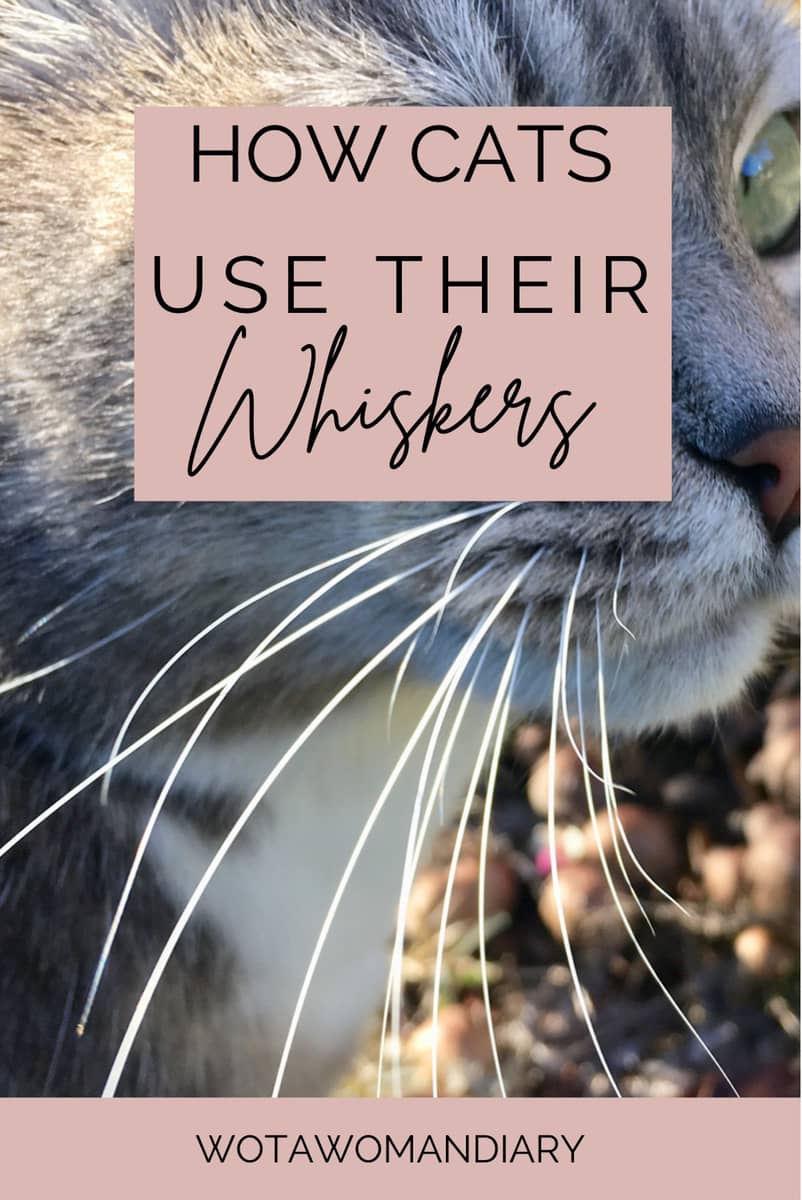
You can pin this image to refer to this post again later 
Leave a Reply