Maybe you have chosen to be vegan and wondering can cats be vegan too.
Maybe your cat is allergic to animal protein. Or maybe you are worried about your pet’s impact on the environment.
Whatever your reason for wanting to move your kitty to a vegan diet, how well does the vegan diet agree with a cat?
In this article, this is exactly what we’re exploring. So, read on to find out more about a cat’s diet.
Can Cats Be Vegan?
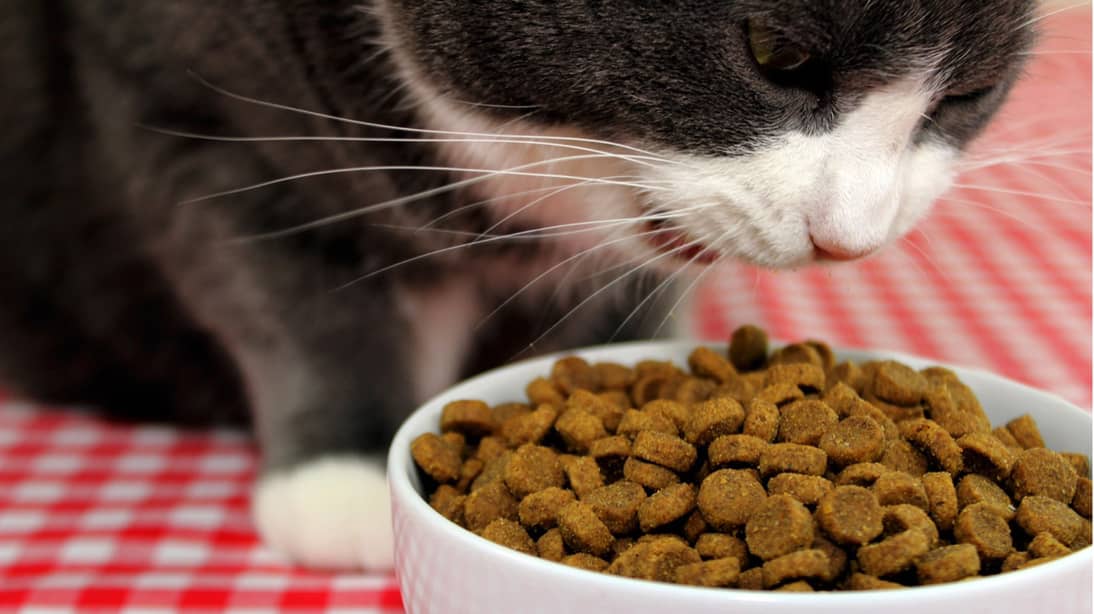
What do cats need from their diet?
Just like other animals, cats need to get a range of nutrients from their diet.
Cats need a high amount of protein with a moderate amount of “good fats”, like Omega 3 and 6. And, though cats do need a certain amount of carbohydrate, they only need a minimal amount of this food group.
Cats also need to get plenty of water from their diet. In the wild, felines had to deal with limited access to clean water. So, cats compensated for this by getting their water intake needs from foods.
The cat’s body is still primed for this today. Because of this, all the best cat foods have a high moisture content, usually in the form of delicious jelly.
However, the unique thing about cats is that they cannot produce specific proteins and amino acids themselves, such as taurine.
Dogs and humans can produce taurine in their bodies, but cats cannot. You can only find this essential feline amino acid in meat and milk, not from any plant sources. For this reason, cats must eat a certain amount of meat and are known as “obligate carnivores”.
Without enough taurine, cats can quickly develop severe eye problems, leading to blindness. Taurine-deficient cats can also develop a potentially fatal heart condition known as dilated cardiomyopathy.
What vitamins do cats need?
Vitamin A is paramount for a healthy immune system and good vision in cats. This fat-soluble vitamin, excess Vitamin A, is stored in your cat’s liver or fatty tissue rather than being peed out. Because of this, too much Vitamin A can quickly become toxic for your cat.
Then there’s the sunshine vitamin, Vitamin D. This vitamin helps your cat’s bones, nerves and muscles balance and store calcium and phosphorus. Another fat-soluble vitamin, your cat’s Vitamin D intake needs to be fine-tuned too.
Cats also need Vitamins B1, B2, B3 and B6, Thiamine, Riboflavin, Niacin and Pyridoxine, to assist with general metabolic and skin and coat health.
What minerals do cats need?
Iron is an essential mineral for cats. Thankfully, this mineral is widely available. Iron deficiency anaemia can make your cat feel weak and tired.
Calcium is vital for cats, too. It helps with bone growth and development and blood and muscle health, and nerve impulse transmission. Calcium is also very important for pregnant and lactating cats. A cat with a calcium deficiency may develop rickets.
Then there’s magnesium, which aids in the growth of your cat’s bones, enzyme function and protein production. Magnesium deficiency is incredibly rare, with symptoms like general weakness and muscle tremors.
Sodium and chloride are two other essential minerals. Sodium helps transfer nutrients to cells and remove waste products, while chloride maintains a healthy alkali balance in your cat’s body. Chloride also helps your cat’s stomach produce hydrochloric acid, which is needed for a cat to digest protein.
Do cats need to eat meat?
Since protein and jelly are so crucial for cats, as well as taurine, you might think this means cats can’t be vegan.
Vegan cat foods can use the iron and calcium from certain legumes, while magnesium is found in wheat germ, whole grains and soybeans.
Saying that, while cats technically can digest vitamins, minerals and proteins from plant sources, these obligate carnivores can’t digest plants very well or efficiently. Plus, cats do need to get certain amino acids that you can only find in meat.
However, as the popularity of pets rises, so too does the amount of livestock bred to feed them. T
his trend is having a knock-on effect on the environment. So, if you care about the environment as much as you care about your kitty’s health, why not make the switch to cat food with insect protein?
Insect-based cat food is a highly digestible option, with all the protein your cat needs, fortified with all necessary vitamins and minerals in optimum amounts.
You can pin this image to refer to this post again later 

* Can cats be vegan is a collaborative post
Leave a Reply